
Most homeowners rarely think about the parts that make their garage door work, at least not until something goes wrong. The springs, hidden in plain sight, carry the weight of the entire system and ensure smooth movement every time the door opens or closes. When one of them fails, the need for garage door spring repair quickly becomes urgent, changing a simple routine into a stressful problem.
The Hidden Work of Springs
Springs are the backbone of a garage door’s movement. They counterbalance the heavy weight of the door, allowing the opener to glide it upward with little effort. Without them, even the strongest motor would struggle to lift the load.
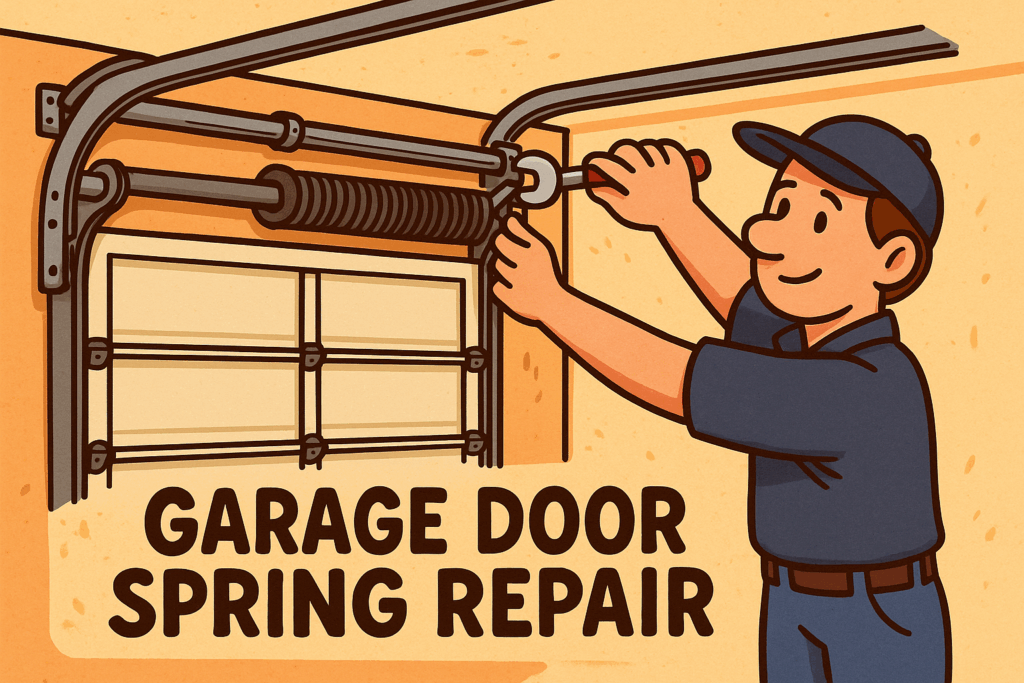
There are two main types of springs used in garage doors: torsion springs mounted above the opening and extension springs positioned along the sides. Both work differently, but their purpose is the same — to make an otherwise impossible task manageable. When they weaken or break, the door becomes heavy, uneven, or stuck in place, and that’s when garage door spring repair comes into focus.
Signs of Trouble and Everyday Risks
Problems with springs don’t always start dramatically. Sometimes they show up as a squeak, a sudden jerk, or a door that feels heavier than usual. At first, these changes can be easy to ignore. But as the wear increases, the risks do too. A spring under extreme tension has the potential to snap suddenly, which can cause damage to the door itself and even create hazards for anyone nearby.
Another sign is when the door doesn’t stay open on its own. If it starts drifting downward, that’s a clear indication the counterbalance is failing. Ignoring these signals often leads to a full breakdown at the most inconvenient time. That’s why paying attention to the early warnings can save a lot of frustration and prevent unsafe situations.
The Impact of Wear and Weather
Like any mechanical part, springs don’t last forever. Each time the garage door opens and closes, they complete a cycle. Over years, these cycles add up, and the steel gradually loses its strength. For households that use the garage as the primary entryway, this wear shows up faster because the springs work harder day after day.
Weather plays a role too. Cold temperatures can make metal brittle, while heat and humidity can cause it to expand or corrode. In areas with wide seasonal swings, these factors accelerate wear, leading to more frequent issues. Understanding how everyday use and environmental conditions affect springs helps explain why breakdowns sometimes seem sudden, even though the stress has been building for months.
Why Precision in Repairs Matters
Repairing or replacing garage door springs is not about quick fixes but about restoring balance to the entire system. Because they hold so much tension, even a small misstep can create dangerous results. Proper adjustment ensures that the weight of the door is evenly supported, preventing strain on the motor and avoiding future damage.
Accurate garage door spring repair not only fixes the immediate issue but also extends the lifespan of other connected parts, such as cables, rollers, and the opener itself. By bringing everything back into alignment, the door regains its smooth and reliable motion. In the long run, this precision makes everyday use safer and less stressful.
The smooth motion of a garage door often feels effortless, but behind it lies the constant work of springs handling enormous weight. When they wear out or fail, the entire system is affected, disrupting routines and raising safety concerns. Addressing the problem with garage door spring repair restores balance, reliability, and peace of mind, ensuring the door does its job quietly in the background once again.